Departmental Inquiry Without Oral Evidence: Why Major Penalties Fail Under Rule 7 of the U.P. Discipline and Appeal Rules, 1999
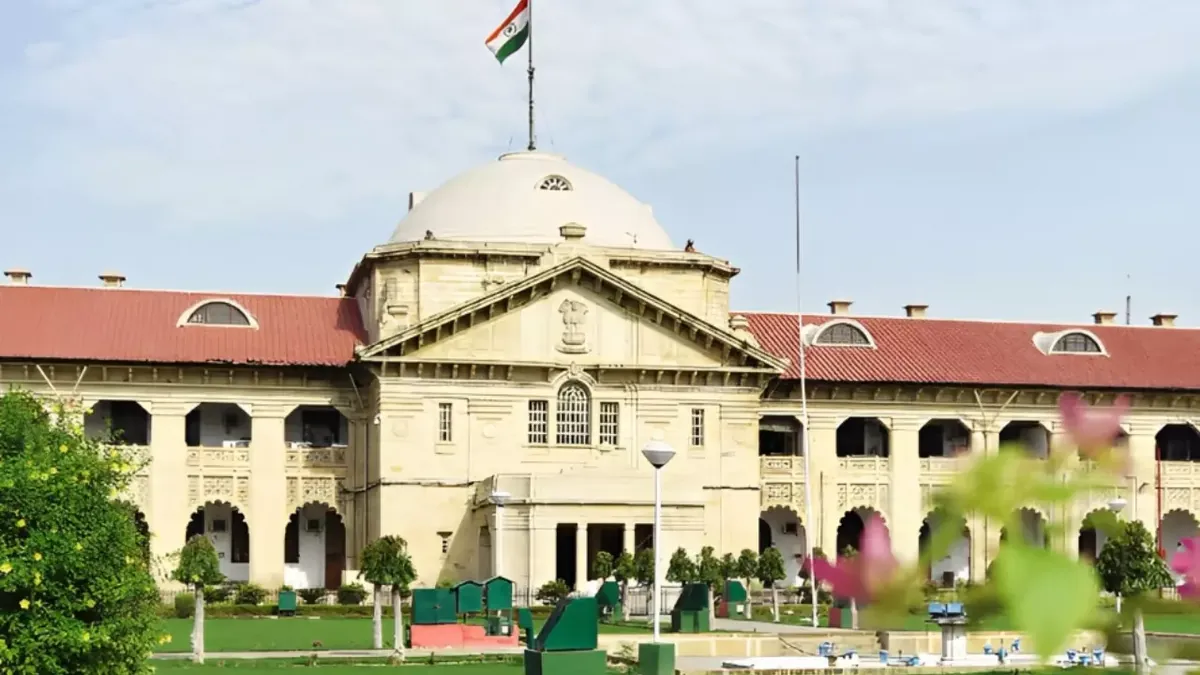
Practice area: Service matters at the Allahabad High Court: suspension, inquiry, pension and regularisation
When a U.P. government servant denies the charges against him, Rule 7(vii) of the Uttar Pradesh Government Servant (Discipline and Appeal) Rules, 1999 requires the Inquiry Officer to call the department's witnesses, record their oral evidence in his presence and let him cross-examine them. An inquiry that skips this step and finds the charges proved on the charge-sheet, the employee's reply and a file of documents cannot support a major penalty. The Supreme Court said so in November 2024 in a case from the Commercial Tax Department, and the Allahabad High Court has applied it repeatedly through 2025 and 2026, to a Lekhpal in Prayagraj, a Sub-Divisional Magistrate in Lucknow and the officiating principal of a polytechnic in Etawah.
This is, in practice, one of the commonest reasons a major penalty against a U.P. government employee is set aside. It is also one of the least understood, by departments and by employees alike. This article makes two points, on the law as it stands on 17 November 2026. First, where the charges are denied, the burden is on the department to prove them with witnesses at an oral hearing, and that burden does not lift because the case rests on documents, because the employee did not ask for witnesses, or because he stayed away. Second, a finding that the inquiry was invalid does not always end the matter: the courts often allow the department to hold a fresh inquiry, and whether that happens depends on the stage, on delay and on whether the employee has retired.
What Rule 7 requires
Rule 7 lays down the procedure for imposing a major penalty. Its steps follow a fixed order, and each one matters when an inquiry is later examined in the Tribunal or the High Court.
Step by step
The charge-sheet must state the charges clearly enough for the employee to know the facts alleged against him, and it must list the documents relied on and the witnesses proposed to prove them (Rule 7(iii)). It is served with copies of those documents, the list of witnesses and their statements, if any; where the documents are voluminous, the employee may instead be allowed to inspect them (Rule 7(v)). The employee is given a date, not less than fifteen days after the charge-sheet, to file his written statement of defence in person and to say whether he wishes to cross-examine any of the listed witnesses and whether he will lead evidence of his own (Rule 7(iv)).
If he admits the charges, the Inquiry Officer reports on that admission (Rule 7(vi)). If he denies them, Rule 7(vii) applies: the Inquiry Officer shall call the witnesses proposed in the charge-sheet and record their oral evidence in his presence, with an opportunity to cross-examine them, and then record the defence evidence the employee asked for in his written statement. The Inquiry Officer may refuse to call a witness only for reasons recorded in writing. He can compel witnesses to attend and documents to be produced under the U.P. Departmental Inquiries (Enforcement of Attendance of Witnesses and Production of Documents) Act, 1976 (Rule 7(viii)), and he may put questions to any witness or to the employee to get at the truth (Rule 7(ix)).
If the employee does not appear on the date fixed despite notice, the Inquiry Officer may proceed ex parte, but even then he records the statements of the witnesses named in the charge-sheet (Rule 7(x)).
Major and minor penalties
Rule 7 applies to major penalties. Under Rule 3, these are withholding of increments with cumulative effect, reduction to a lower post, grade, time scale or stage, removal from service and dismissal. Minor penalties, such as censure or withholding of increments without cumulative effect, follow a shorter procedure without an oral inquiry. The label on the order is not decisive: what counts is the penalty actually imposed. In Satyendra Singh, discussed below, the order combined a censure entry with stoppage of two increments with cumulative effect, and the parties accepted that it was a major penalty.
Why an inquiry without oral evidence fails
Documents do not prove themselves
A departmental inquiry is not a criminal trial and the Evidence Act does not apply in its full rigour. But the Inquiry Officer acts in a quasi-judicial capacity, and his findings must rest on evidence. The Supreme Court held in Roop Singh Negi v. Punjab National Bank (2009) that documents relied on by the department have to be proved; their mere production is not enough. In State of U.P. v. Saroj Kumar Sinha (2010) it held that where no oral evidence has been examined, the documents have not been proved and cannot be the basis of a finding. Both passages were relied on by the Supreme Court in Satyendra Singh (paras 14 and 15).
The charge-sheet and the reply are not evidence
The commonest defective inquiry report in Uttar Pradesh reads the charge-sheet, reads the employee's reply, finds the reply unconvincing and holds the charge proved. In Jagmohan v. State of U.P. (2025), the Allahabad High Court held that an Inquiry Officer cannot return findings by merely reading the charge-sheet and the reply; the establishment must lead evidence, and if the employee leads none, the burden does not shift to him (paras 2 and 26).
The Supreme Court went further in Jai Prakash Saini (2026). The employer argued that the employee's reply was evasive and therefore amounted to an admission, so that no witness was needed. The Court rejected this: a departmental charge-sheet is not a plaint, and an evasive reply to it is not an admission. Unless the charge is admitted in clear terms, the burden of proving it remains on the employer (paras 13 and 14).
An ex parte inquiry still needs evidence
An employee who does not take part in the inquiry does not thereby admit the charges. In Satyendra Singh the Supreme Court held that even in an ex parte inquiry, recording the evidence of witnesses is an essential condition for proving the charges, and that an inquiry without it is vitiated and non est (para 17). Rule 7(x) says the same: the inquiry may go ahead in the employee's absence, but the witnesses' statements are still to be recorded.
Statements from a preliminary inquiry
Many proceedings begin with a fact-finding or preliminary inquiry, often by an officer who records statements without the employee being present. Those statements cannot take the place of evidence in the regular inquiry. In Nirmala J. Jhala v. State of Gujarat (2013) the Supreme Court held that evidence recorded in a preliminary inquiry cannot be used in the regular inquiry, because the delinquent is not associated with it and has no chance to cross-examine (para 45, relied on in Satyendra Singh, para 16).
The recent rulings
Satyendra Singh v. State of U.P., Supreme Court, 18 November 2024
The appellant was an Assistant Commissioner, Commercial Tax, at Ghaziabad. A charge-sheet was issued in March 2012, and in November 2014 he was given a censure entry and stoppage of two increments with cumulative effect. The State Public Services Tribunal at Lucknow quashed the penalty in 2015. The High Court's Lucknow Bench set the Tribunal's order aside in 2018 and restored the penalty. The State's counsel accepted before the Supreme Court that no witness had been examined and that the Inquiry Officer had relied only on documents (para 12).
A Bench of Pamidighantam Sri Narasimha and Sandeep Mehta JJ. held that recording oral evidence under Rule 7(vii) is mandatory when an inquiry proposes a major penalty (paras 11 and 13), that the inquiry was vitiated (para 17), and that the High Court was wrong to interfere with the Tribunal's reasoned order (para 18). The Tribunal's order was restored, with all consequential benefits, payable within two months, failing which with interest at 6% a year (paras 19 and 20).
Jagmohan v. State of U.P., Allahabad High Court, 3 March 2025
A Lekhpal of Tehsil Meja in Prayagraj was charged in 2010 over mutation entries. The first inquiry held no hearing and examined no witness; the Tribunal quashed his dismissal in 2015 and allowed a fresh inquiry. The fresh inquiry made the same mistake. J.J. Munir J. held that a date, time and place must be fixed for the inquiry, the establishment must lead its evidence and its witnesses must be made available for cross-examination (para 26). Observing that quashing orders alone had not changed the practice, the Court directed that a copy be sent to the Chief Secretary for compliance with the settled law in all departments of the State Government (paras 3 and 38).
Jai Prakash Saini v. Managing Director, U.P. Cooperative Federation Ltd., Supreme Court, 1 April 2026
This case arose under the service regulations of the U.P. Cooperative Federation, not the 1999 Rules, but the principle is the same and the Supreme Court stated it in general terms. The employee, in charge of a procurement centre, was dismissed and ordered to make good the alleged loss. The employer admitted that no witness had been examined. Manoj Misra J., writing for himself and Sanjay Karol J., held that even where the case rests entirely on documents, a witness must be examined to prove them unless the employee admits them, and that the inquiry must begin with the employer leading evidence and the employee being allowed to cross-examine (para 17, relying on State of Uttaranchal v. Kharak Singh (2008) and Chamoli District Co-operative Bank Ltd. v. Raghunath Singh Rana (2016)). The dismissal and the recovery order were set aside.
Santosh Kumar Singh v. State of U.P., Allahabad High Court (Lucknow), 10 June 2026
The petitioner, then Sub-Divisional Magistrate, Mohanlalganj, was proceeded against under Rule 7 for approving a list of housing-site allottees without proper scrutiny. The Commissioner, Lucknow Division, was the Inquiry Officer. In 2025 he was given permanent withholding of one increment and a censure. Karunesh Singh Pawar J. found that no date, time or place for the inquiry was ever fixed, that no witness was produced in support of the charges, and that the documents relied on could not be taken into account without oral proof (paras 30, 31 and 43). The State argued that the petitioner had never asked for an oral hearing and could not complain now; the Court nonetheless held the proceedings vitiated. Unexplained delay of about four years and a non-speaking punishment order added to the defects (paras 32 and 38 to 41). The orders were quashed and all consequential benefits restored (paras 51 to 54).
Anil Kumar Yadav v. State of U.P., Allahabad High Court, 21 August 2026
This case shows that calling a witness is not enough; the witness must be examined in the employee's presence. The officiating principal of the Government Polytechnic, Etawah, was charged on a complaint that was not on affidavit and whose maker never appeared. The student concerned was examined on a different date from the petitioner, and he was not told of that date. His request to cross-examine was never granted. Siddharth Nandan J. held that holding the inquiry on two different dates in this way breached Rule 7(vii) (para 14); that the Inquiry Officer must follow natural justice even without a specific request from the employee (para 15); and that he must inform the employee of the date, time and place of the inquiry (para 18). The order was set aside and the petitioner reinstated, with liberty to the authorities to start afresh if the law permits, strictly under the 1999 Rules (paras 22 and 23).
The answers to the department's usual arguments
Four arguments are made in reply to almost every petition of this kind. The cases above answer each of them.
"He never asked for witnesses." The duty under Rule 7(vii) is the Inquiry Officer's, and it arises when the charge is denied. The Allahabad High Court held in Anil Kumar Yadav that the Inquiry Officer must follow natural justice even without a specific request (para 15), and in Santosh Kumar Singh the same argument did not save the inquiry.
"The case is documentary; there is nothing for a witness to say." The Supreme Court rejected this in Jai Prakash Saini (para 17) and in Satyendra Singh (para 14). Even an official record has to be proved by someone who can speak to it, unless the employee admits it.
"He did not participate." Non-participation permits an ex parte inquiry. It does not dispense with evidence (Satyendra Singh, para 17; Rule 7(x)).
"He admitted the facts in his reply." Only a clear admission counts. An evasive or partial reply is not an admission (Jai Prakash Saini, paras 13 and 14). Where the employee has admitted some facts but disputes the conclusion drawn from them, the admitted facts may stand, but the charge itself still has to be proved.
There are cases in which Rule 7 does not apply at all. Its provisos follow Article 311(2) of the Constitution: where the penalty is based on conduct that led to a criminal conviction, where the disciplinary authority records in writing its reasons for holding that an inquiry in the prescribed manner is not reasonably practicable, and where the Governor is satisfied that an inquiry is not expedient in the interest of the security of the State. Those are separate questions, and an order resting on the second proviso is examined on whether the reasons recorded are genuine.
What the employee should do during the inquiry
Most of these cases are won or lost on the file of the inquiry itself, so what the employee puts in writing at each stage matters.
First, in the written statement under Rule 7(iv), deny each charge specifically, name the witnesses from the charge-sheet whom he wishes to cross-examine, and list any witnesses and documents he wants in defence. Second, ask in writing for copies of every document relied on, and for the statements of the listed witnesses. Third, ask the Inquiry Officer to fix and notify a date, time and place for the oral inquiry, and keep the notices. Fourth, if the Inquiry Officer closes the inquiry without recording any evidence, object in writing before the report is sent. Fifth, when the inquiry report is served with a show-cause notice, reply on the merits and also on the procedure: that the charges were denied, that no witness was examined, and that the documents were not proved.
These steps do not create the right; Rule 7(vii) does. They make the defect clear on the record, which is where the Tribunal and the High Court will look for it.
Where the penalty is challenged
An employee of the State Government, of a local authority (other than a Cantonment Board) or of a corporation owned or controlled by the State ordinarily challenges a penalty before the U.P. State Public Services Tribunal at Lucknow, within one year; the time during which a departmental appeal or representation under the rules was pending is excluded. The High Court ordinarily sends such employees to the Tribunal (State of U.P. v. Labh Chand, 1994), though it has heard several Rule 7 cases directly by writ petition in 2026, including Santosh Kumar Singh and Anil Kumar Yadav. Teachers and staff of aided institutions and employees of bodies outside the Tribunal Act come to the High Court under Article 226. A judgment of the Tribunal is challenged by writ petition before a Division Bench of the High Court, and from there by special leave petition to the Supreme Court, which is the route Satyendra Singh took.
Quashed, or sent back for a fresh inquiry?
This is the hardest question in these cases, and the answer varies. In Satyendra Singh and Santosh Kumar Singh, the courts quashed the penalty and restored the employee's benefits, and gave no liberty to start again. In Jai Prakash Saini, by contrast, the Supreme Court allowed the employer six months to hold a fresh inquiry, with the employee reinstated and placed under suspension meanwhile, and full arrears only if no inquiry was held (para 18). In Anil Kumar Yadav the High Court left it open to the authorities to start afresh if the law permits.
Three things usually decide which way it goes. The first is the stage at which the inquiry went wrong: where the charge-sheet was valid and the defect began at the hearing, a fresh inquiry from that point is the usual course. The second is time: long, unexplained delay, as in Santosh Kumar Singh, weighs against starting over. The third is retirement. Once the employee has retired, the disciplinary authority can no longer impose a penalty itself; proceedings continue, or begin, only under Article 351-A of the Civil Service Regulations, and only the Governor can order a reduction of pension. In Jagmohan, decided after the Lekhpal retired, the High Court allowed a fresh inquiry from the charge-sheet stage but held that any finding of guilt must go to the Governor, and that if no fresh inquiry was held he would be entitled to all consequential benefits, including pay for the period he was out of service (paras 30 to 37).
An employee therefore cannot always prevent a second inquiry. What he can expect is that the second inquiry, if there is one, is held under Rule 7, with the department's witnesses called and his right to cross-examine them respected.
Conclusion
The rule itself is short. When the charge is denied, the department must prove it, at a hearing of which the employee has notice, through witnesses he can cross-examine, before the Inquiry Officer may hold the charge proved and before a major penalty may follow. Documents, the charge-sheet, the employee's reply and statements from a preliminary inquiry are not substitutes for that evidence. The Supreme Court has said this twice in the last two years, and the Allahabad High Court has asked the Chief Secretary to see that every department follows it.
What remains uncertain in any particular case is the remedy: whether the penalty is simply set aside, or the department is allowed to try again. That depends on the stage at which the inquiry failed, the time that has passed and whether the employee is still in service, and it is the question to examine first when a penalty order arrives.
Key Authorities Cited
- Satyendra Singh v. State of Uttar PradeshSupreme Court of India, 2024-11-182024 INSC 873; 2024 SCC OnLine SC 3325; Civil Appeal arising out of SLP (C) No. 29758 of 2018Paras: 11, 12, 13, 14, 15, 16, 17, 18, 19, 20
- Jai Prakash Saini v. Managing Director, U.P. Cooperative Federation Ltd.Supreme Court of India, 2026-04-012026 INSC 305; [2026] 4 S.C.R. 286Paras: 13, 14, 17, 18
- Jagmohan v. State of U.P.Allahabad High Court, 2025-03-03(2025) 3 ILRA 191; Writ-A No. 11524 of 2024Paras: 2, 3, 26, 30, 31, 32, 33, 34, 35, 36, 37, 38
- Santosh Kumar Singh v. State of U.P.Allahabad High Court (Lucknow Bench), 2026-06-10Writ-A No. 2342 of 2026Paras: 30, 31, 32, 43, 51, 52, 53, 54
- Anil Kumar Yadav v. State of U.P.Allahabad High Court, 2026-08-21Writ-A No. 4701 of 2026Paras: 14, 15, 18, 22, 23
- Roop Singh Negi v. Punjab National BankSupreme Court of India(2009) 2 SCC 570Paras: 14
- State of U.P. v. Saroj Kumar SinhaSupreme Court of India(2010) 2 SCC 772Paras: 28
- Nirmala J. Jhala v. State of GujaratSupreme Court of India(2013) 4 SCC 301Paras: 45
- State of Uttaranchal v. Kharak SinghSupreme Court of India(2008) 8 SCC 236
- Chamoli District Co-operative Bank Ltd. v. Raghunath Singh RanaSupreme Court of India(2016) 12 SCC 204
- State of U.P. v. Labh ChandSupreme Court of IndiaAIR 1994 SC 754
Statutory Provisions
- Uttar Pradesh Government Servant (Discipline and Appeal) Rules, 1999 - Rule 3 (minor and major penalties)
- Uttar Pradesh Government Servant (Discipline and Appeal) Rules, 1999 - Rule 7 (procedure for imposing major penalties), especially sub-rules (iii) to (x) and the provisos
- U.P. Departmental Inquiries (Enforcement of Attendance of Witnesses and Production of Documents) Act, 1976 - Power to summon witnesses and documents (applied by Rule 7(viii))
- U.P. Public Services (Tribunal) Act, 1976 - Section 2(b) and Section 5(1)(b) (who may file; one year limitation)
- Civil Service Regulations (Uttar Pradesh) - Article 351-A (proceedings after retirement; Governor's power)
- Constitution of India - Article 311(2) and Article 226
Frequently Asked Questions
The Inquiry Officer did not examine any witness, but I was dismissed. Is that valid?
Not if you denied the charges. Rule 7(vii) of the 1999 Rules requires the Inquiry Officer to call the witnesses named in the charge-sheet, record their evidence in your presence and allow cross-examination. In Satyendra Singh v. State of U.P. (2024 INSC 873) the Supreme Court held that an inquiry for a major penalty without oral evidence is vitiated. The penalty can be challenged before the State Public Services Tribunal or, where the Tribunal Act does not apply, in the High Court.
The department says the case rests only on documents, so no witness was needed. Is that right?
No. Unless you admit the documents, they have to be proved by a witness who can speak to them. The Supreme Court said so in Jai Prakash Saini (2026 INSC 305, para 17) and in Satyendra Singh (para 14), relying on Roop Singh Negi and Saroj Kumar Sinha.
I did not ask for cross-examination in my reply. Can I still raise the point?
Yes. The duty to call and examine witnesses arises when the charge is denied, and the Allahabad High Court held in Anil Kumar Yadav (21 August 2026) that the Inquiry Officer must follow natural justice even without a specific request. It still helps to raise the objection in your reply to the show-cause notice, so that it is on the record.
I did not attend the inquiry. Can the department say the charges are proved?
The inquiry may proceed ex parte under Rule 7(x), but the witnesses' statements must still be recorded. In Satyendra Singh (para 17) the Supreme Court held that even in an ex parte inquiry, recording the evidence of witnesses is essential for proving the charges.
Can statements recorded in the preliminary inquiry be used against me?
Not as evidence in the regular inquiry. The Supreme Court held in Nirmala J. Jhala v. State of Gujarat (2013) that evidence recorded in a preliminary inquiry, at which the employee is not present and cannot cross-examine, cannot be used in the regular inquiry. Satyendra Singh relied on this (para 16).
If the penalty is quashed, can the department hold a fresh inquiry?
Often, yes. The courts have sometimes simply restored benefits (Satyendra Singh; Santosh Kumar Singh) and sometimes allowed a fresh inquiry within a fixed time (Jai Prakash Saini). Delay and retirement matter. After retirement, any further proceeding runs under Article 351-A of the Civil Service Regulations, and only the Governor can order a cut in pension (Jagmohan, 2025).
Does this apply to a censure or a minor penalty?
Rule 7 governs major penalties: withholding of increments with cumulative effect, reduction to a lower post, grade or stage, removal and dismissal. Minor penalties such as censure follow a shorter procedure without an oral inquiry. Where a censure is combined with a major penalty, as in Satyendra Singh, Rule 7 applies to the whole proceeding.
Sources & References
- Satyendra Singh v. State of Uttar Pradesh, 2024 INSC 873, judgment dated 18 November 2024 (Supreme Court of India)
- Jai Prakash Saini v. Managing Director, U.P. Cooperative Federation Ltd., 2026 INSC 305, 1 April 2026 (SC Observer Law Reports)
- Jagmohan v. State of U.P., (2025) 3 ILRA 191, 3 March 2025 (Allahabad High Court, ILR)
- Santosh Kumar Singh v. State of U.P., Writ-A No. 2342 of 2026, 10 June 2026 (LiveLaw report)
- Anil Kumar Yadav v. State of U.P., Writ-A No. 4701 of 2026, 21 August 2026 (LiveLaw copy of the judgment)
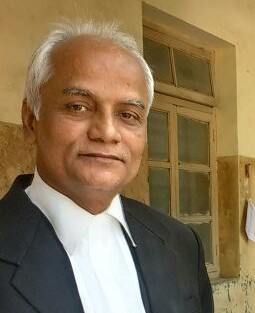
Shri Law Chambers. Practises before the Allahabad High Court in service and criminal matters; in practice since 1991.
Enrolled with the Bar Council of Uttar Pradesh, 1991 · Advocate-on-Record, Allahabad High Court · Allahabad High Court Bar Association · LL.B., Faculty of Law, University of Allahabad, 1990 · Former standing counsel: Government of India; Zila Panchayat, Kanpur Nagar; Fisheries Department (Matsya Palan Vibhag), Government of Uttar Pradesh